
Anthony Trollope and a coincidence!
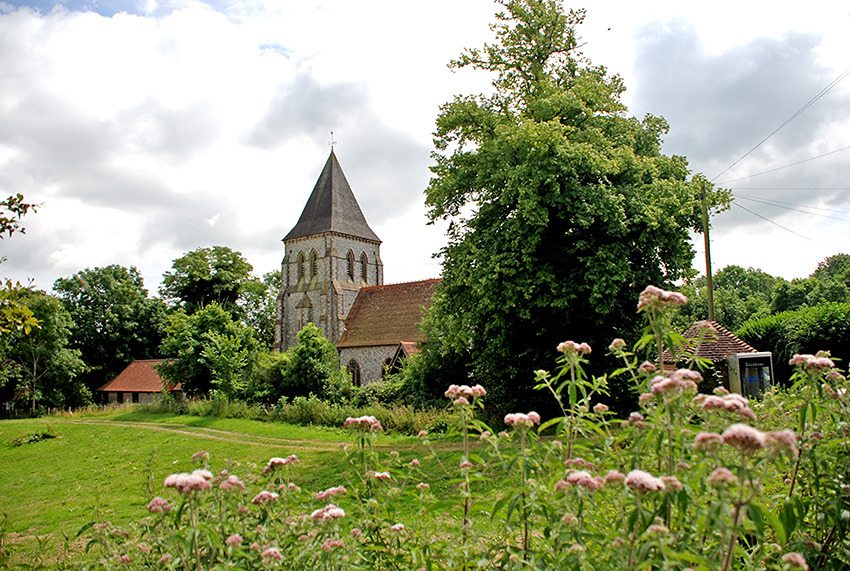
You know that moment when a film or TV detective smugly pronounces that either they or a senior colleague they revere ‘does not believe in coincidences’? Almost every time it has me screaming at the little screen! In my mind these pronouncements are the scriptwriters owning up to having to control the dramatic arc so as to provide predictable, rather than unpredictable, outcomes allowing viewers to at least have a semblance of involvement.
In real life coincidences do happen. In real life lottery numbers picked at random can come out in sequence. My mother got cross when one set was 12, 14, 16, 18.
Where I live now is a case in point. Soon after we first moved in, an elderly lady moved in next door (I have dedicated the churches book to her). As you do, we started to ask polite questions and then all of a sudden my husband cried out ‘You must be Anne Mallinson’ at the same time that she cried out ‘You must be Simon Davey!’ This was in 2005. In Sussex. But in 1970 they had worked together in Hampshire in Selborne to mark the 250th anniversary of the birth of Rev. Gilbert White. When Simon and I first met he had sung the praises of Anne’s natural history bookshop in Selborne, although we had never managed to visit it. And here she was moving in next door and a friendship began that lasted nine years.
A couple of years later, a new couple moved in next door to us on the other side. A random conversation a few months later identified that the man was a brother of Simon’s best friend at school and university who he had, until only a few weeks earlier, been trying to refind. Again, absolutely no previous connection to Sussex had been involved.
So, I suppose it should not have come as the surprise that it did that I had a different sort of coincidence when working on writing the history and checking the connections for my book on South Downs churches!
The Victorian author Anthony Trollope had come up already a couple of times (I will of course mention those in a minute) and the first time had got me curious to know a bit more about his novels. As a child I had loved The Pallisers on TV, falling profoundly in love with the elderly Duke of St. Bungay because of his voice (the brilliant Roger Livesey, most notably in A Matter of Life and Death with David Niven). I had found a collection of Trollope’s lesser-known works as an audiobook and had been listening to it while doing the washing-up and other tedious household chores.
One story that had piqued my curiosity was called John Caldigate about a restless youth who had gone out to Australia to dig for gold because he found his relationship with his father ‘testing’. It was published in 1879 and included tales of seduction and theft, or non-theft. I hadn’t quite finished listening to it while I was digging into the history of Offham church in East Sussex.
The land on which the church was to be built in 1858-9 was owned in 1840 by a Thomas Partington. As was my habit, I looked Partington up to see if he had an enticing story about him, to see that his son, also Thomas, had spent time during the gold rush in Australia. What a weird coincidence, I thought, to be listening to Trollope’s gold rush tale and at the same time be reading about one in connection to a church site. Of course, the thought ran on, ‘wouldn’t it be even more nuts if Trollope was somehow also involved?’! My jaw did drop when it didn’t take long to discover that the boy’s mother was Anthony Trollope’s Aunt Penelope, sister of his father. What I didn’t know until sorting this video out was that Trollope’s own son was a sheep farmer in Australia and he had written about his visits to see their family, to mixed reactions from the Australians. But that does not interfere with the truth of my coincidence.
And this is even more reason for my bluster at those TV dramas!
The first time I found out that Trollope had a connection to the South Downs was when researching St Cross, in Winchester, the famous Norman hospital and almshouses.
In his book,The Warden, that precedes Barchester Towers, the Warden Septimus Harding is accused of overdoing his financial takings from the living, which was inspired by the scandal that surrounded the real Master, Francis North, Earl of Guildford, who had acquired a number of livings and was thereby able to live lavishly and hardly to visit the hospital. Trollope had been at school in Winchester which was an ancient yet small city in his day and the city of Barchester is an amalgamation of cathedral cities, that include Winchester.
But it also then turned out that South Harting had been the Trollope home and library, at Harting Grange, for his last year and a bit, from July 1880 to late 1882, he died in London that December. He is not buried in the village, but in Kensal Green cemetery in London near to Wilkie Collins one of his many friends. However, the church is proud to contain his pen inside a case indoors.
While the links are considerably less than those to Jane Austen, Anthony Trollope is still celebrated as a significant name in the National Park. There could well be more influence from it on his writings than have come to light for me in my less intense studies looking at the churches, most probably from his short years at Winchester College although he did complete six to seven books it seems from his time in South Harting, it appears he had started them some time before? The story goes that he had a manservant wake him at 5am with a drink and he would be at his desk writing by 5:30, keeping up the pace until he dressed for breakfast and continued his day doing other things, including his job at the post office before he retired.
Comments