
Pondering on Yew Trees in the South Downs churchyards
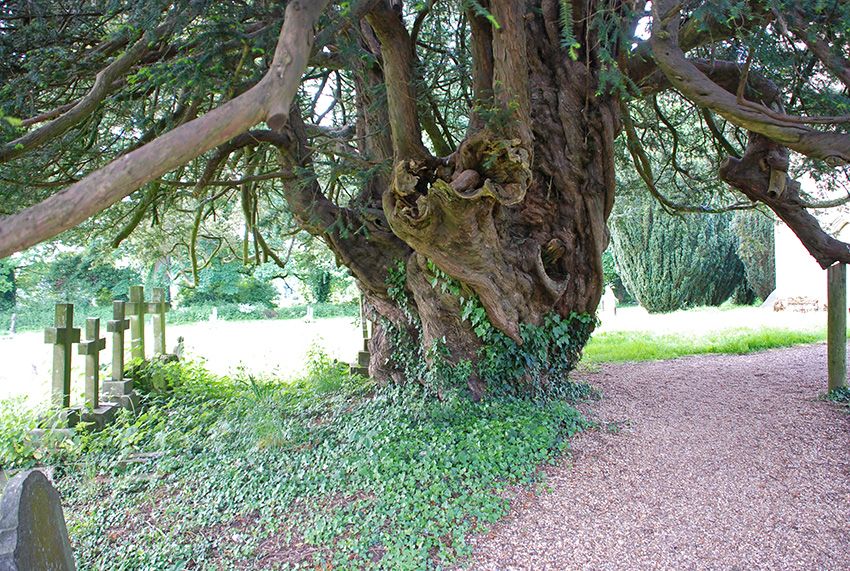
We have some beauties!
Over the last few posts, it has been ‘celebrity’ topics related to In their Landscape and this time it is another celebrity topic, but a slightly different one.
If there was ever a Celebrity Tree, it would be the yew. Anybody who visits large numbers of churchyards will have visited and seen or been aware of the fantastic and beautiful yew trees that are often present, and across the South Downs there are a large number of very flamboyant, magnificent specimens. And there’s also Kingley Vale in West Sussex, where they grow wild, which is a wonderful place to visit.
But, what I’m talking about today are trees that occur in the churchyards, obviously, because it relates to the book. There are a lot of misunderstandings or myths or folk stories that relate to yew trees.
Pagan trees
They are often considered to be pagan worship trees. But the whole idea of paganism is very complex, and there is apparently no proof until the Middle Ages that there was any such thing.
Before Christianity in this country, there were a lot of different and very local, religious forms. The Romans had all sorts of gods. They had house gods. They had wild gods, roaming gods, big fat gods like Jupiter. Mithras is another famous Roman deity. Anyway, there is a lot of superstition around yew trees because they are evergreen and don’t drop their leaves in the winter, which means that they are associated with eternal life.
Longbow wood
Another notion is that of longbows being fashioned from churchyard yew trees and having them grow there was a way of protecting them for all the wars that were being fought, all the hand combat wars in the Middle Ages. But that is not quite the thing, because the longbow wood needed to be harder than the wood that is in British yew trees.
It is Taxus baccata wood, but it’s actually Taxus baccata from southern alpine areas of countries like France, Italy, Spain, not British wood. These areas produce tougher, more resilient wood, with fewer knots in it.
The berries are poisonous, or at least the centre of the berries is poisonous, but really, just don’t even bother trying to work out which bit is. Just say that it is poisonous. It is not a good idea to have livestock browsing them. But that’s not why they’re there, although maybe you could argue that could be why they have remained.
AGE
It is all very complicated. And now we get to the thorny question of how old are they? Dr David Bellamy and his chums landed themselves with a very peculiar formula put together by one of their colleagues and went around the countryside assessing the venerable trees, telling people that the trees are about three times as old at least (if not more) than they actually are. There are all sorts of certificates that you might find in a church proudly stating that they are 2000 or 4000 years old. It’s usually probably nearer to nudging a thousand. There is evidence from Selborne as a result of 1990 storm damage, which is given more attention further below.
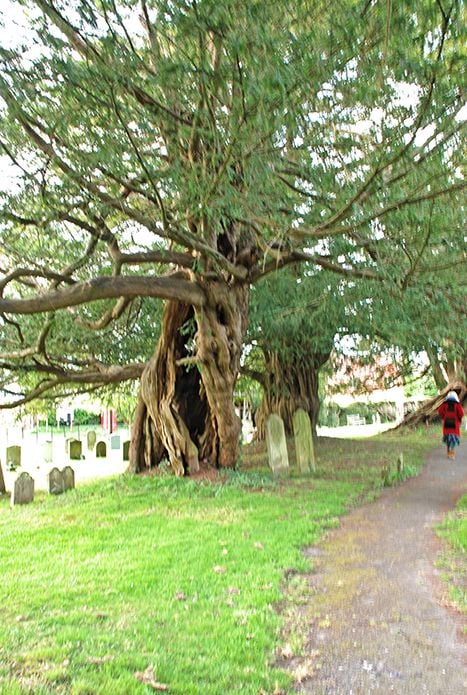
As with all trees that grow to a venerable age, yew trees stop needing to have their heartwood. This means that they usually lose it, getting what they need going up to the branches. The branches continue to have a core, but the main trunk hollows out, and with aging yew trees the hollowing can get really quite something.
Upper Farringdon
Rev. Gilbert White was curate here, and there are two venerable yew trees that grow in the churchyard.
The girth is enormous. But the way that yew trees grow is complicated. This is where the aging ideas go a bit nuts.
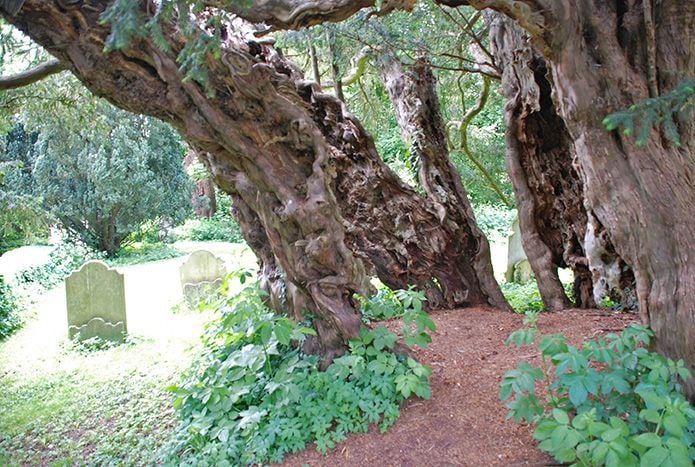
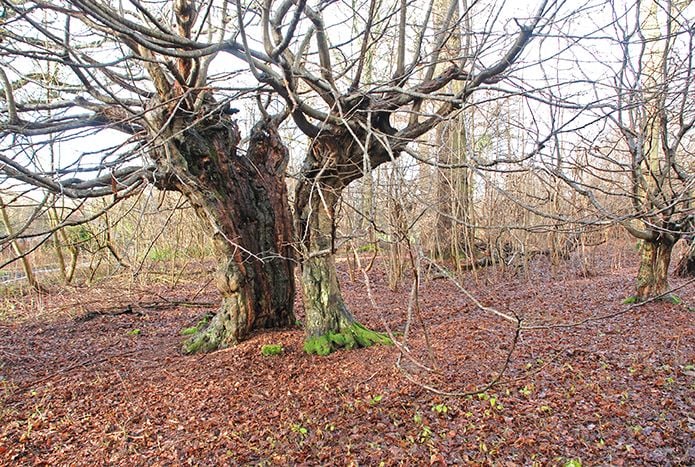
There are other trees that grow in similar ways, for example Hornbeam. (This is a private estate in Kent). Hornbeam will also lose its heart and yet continue to flourish. These have been pollarded for 800 years plus and can grow into extraordinary forms in the same way as yew trees. They can put down aerial roots, that then turn into part of the trunk. These roots can go down outside or inside, but be confusing when you start trying to measure the girth of the tree.
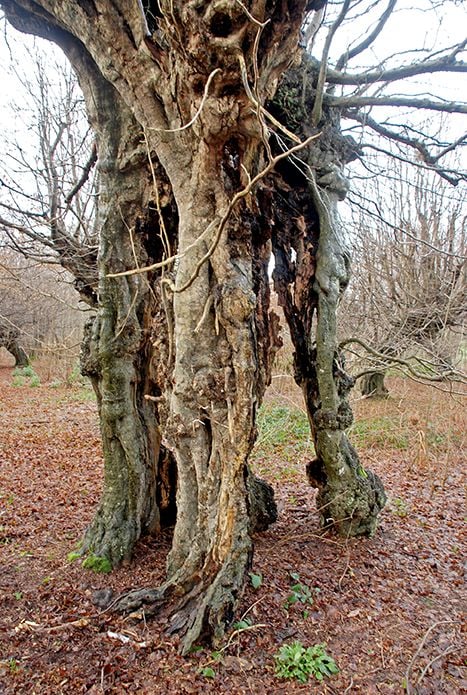
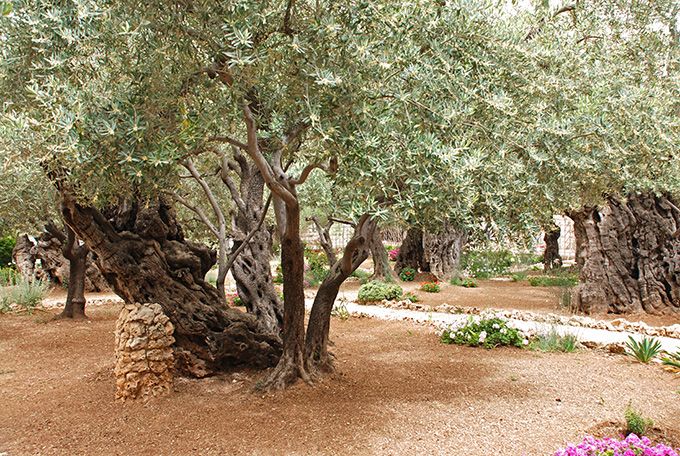
Olive trees will do the same sort of thing. They hollow out, they go a bit saggy, needing to be propped up and lose the core and then drop down the strange roots and confuse everybody and the fragments spread out and turn into groves of trees.
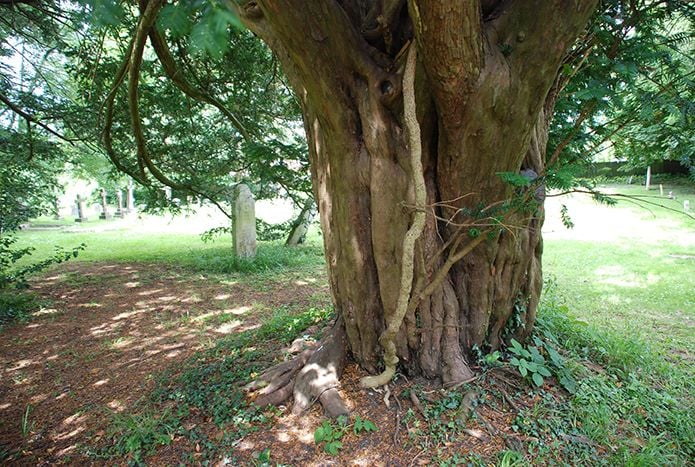
Ringmer
Here you can see that there are all sorts of roots that have come down, spreading out at the base of the tree, plus one that looks a bit like a Tarzan rope coming down.
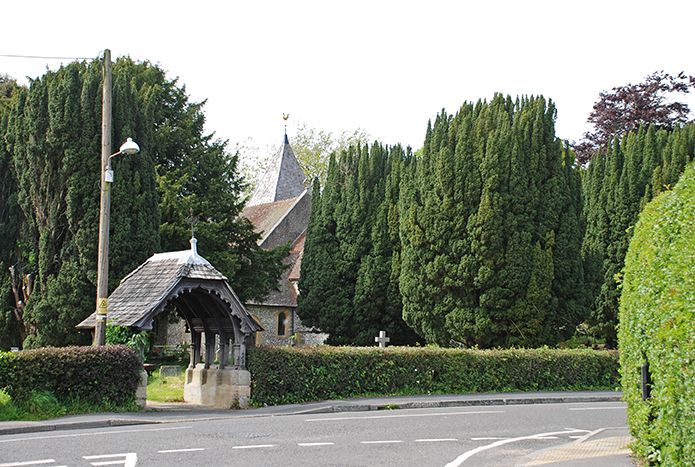
Swanmore
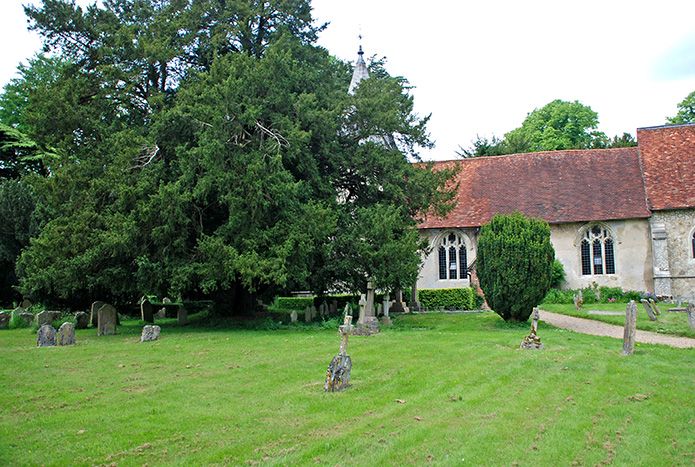
This shows fastigiate yews, otherwise called Irish yew. Many grow in churchyards, but they are much more recent and have no history of getting to a venerable state. Swanmore is in Hampshire, and is a Victorian church on a site that was first built on by the Victorians, which is unusual in the National Park.
Male vs Female trees
Tree people talk about male and female yew trees, which are usually one or the other. The famous Scottish Fortinghall yew is older and seems to be going through a confusion of identity, having been male, it seems now to be turning female with a branch bearing berries.
The female trees are the ones that have the berries. There are other less obvious identification markers at other times of year, but the simplest one is if they’ve got berries in the autumn and winter, then they are girls.
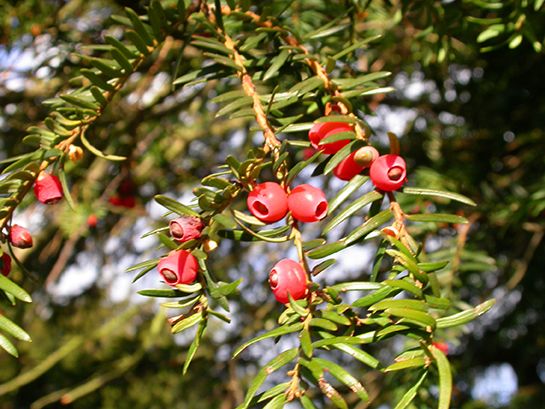
Selborne (Hampshire, Rev. Gilbert White’s church)
This used to be one of the more magnificent yew trees in the country, until in 1990 a violent storm blew it over. Unfortunately, the hollow trunk shattered in the fall and went into bits. In spite of this there were determined attempts to save it, digging a huge pit to set it back up, but it didn’t survive.
You can see in the photograph, just to the bottom right of the tree, that there’s what looks like yew growth. It is, but apparently it isn’t growth from the old tree. Somehow or other, some blackbird ate a yew berry (they can cope with the toxins) and it germinated and turned into a bushlet.
In the pit dug to stabilize the tree it is fairly obvious, being on the south side of the churchyard, it would have had burials that were associated with it. What is interesting and helpful in terms of looking at the aging of yew trees is that they found that deepest burial was underneath part of the root plate of the tree. The tree had been growing prior to the burials, but was not vast. The burial remains dated back to the 12th or 13th century from the elements that were present in the wood and the pottery that really was associated with it.
The estimate from the excavation was that the original tree would have been about a meter in diameter and therefore approximately 2-300 years old, so that means that it is likely that the Selborne yew by the time it fell in 1990, was approximately a thousand years old.
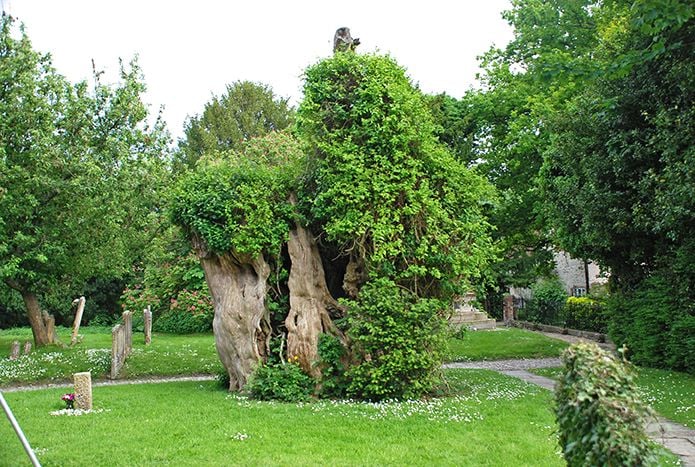
Up Marden (West Sussex)
This is not known to be a venerable yew tree. This is a yew glade, but it looks remarkably as though it was once a single tree, given the way that it grows and the sort of circular form of it. There are three clumps that could be, or might not be, previously single trees. I doubt whether they’ve been tested for DNA to see if they are the same tree or not, but it’s interesting to think about because that’s more or less what’s happened to the Fortinghall yew.
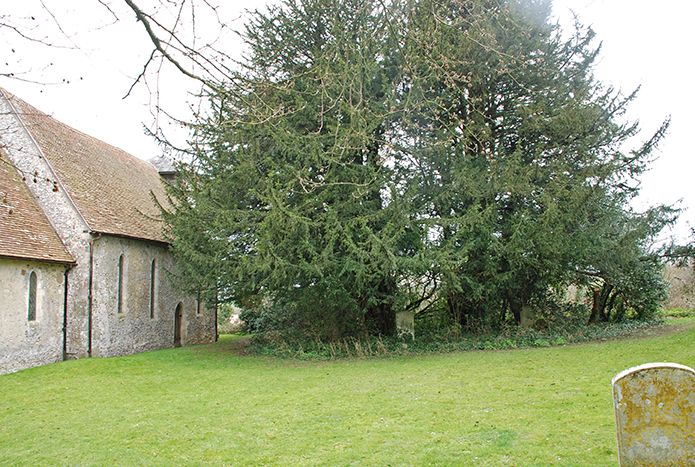
High Cross (Hampshire)
This is a young yew tree, with a flamboyant crown that looks larger than the trunk implies. Photographs from the building of the church in the Victorian era show no yew tree present. Yews grow at totally different rates, some years, apparently, they go dormant. When there’s no heartwood it’s not possible to do any tree ring analysis. But even doing tree ring analysis, where the tree hasn’t grown at all, not always going to get a ring to count, so that’s going to confuse matters. Work has been done on some dead wood in the core of younger than ancient yew trees. That’s come up with dates going back to about 4-500 years.
It feels as though the majority of the ancient yews in the settlements of the National Park are approximately a thousand years old, give or take the odd 50 or 80 years, certainly well within the Christian period.
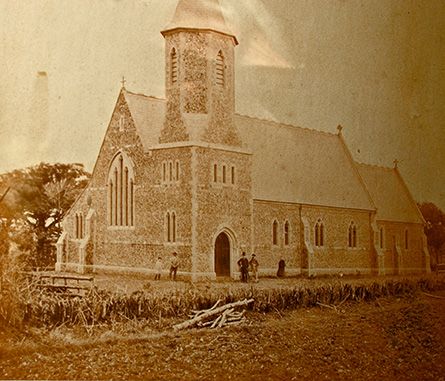
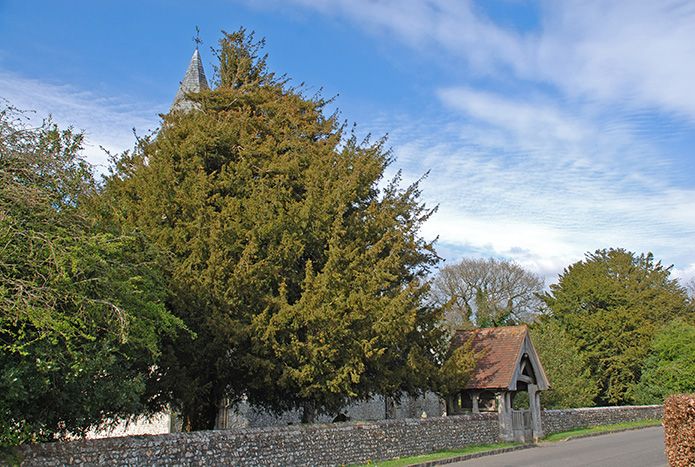
Hawkley (Hampshire)
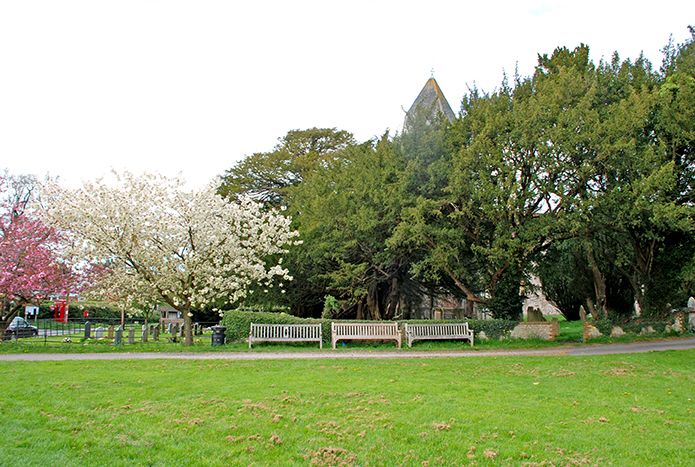
This is a wonderful row of yew trees that have grown next to where the earlier church used to be - replaced in the Victorian era. One of them is split apart and is propped up in various bits. It’s the same tree. It’s just in three bits.
WELFARE
Wilmington (East Sussex)
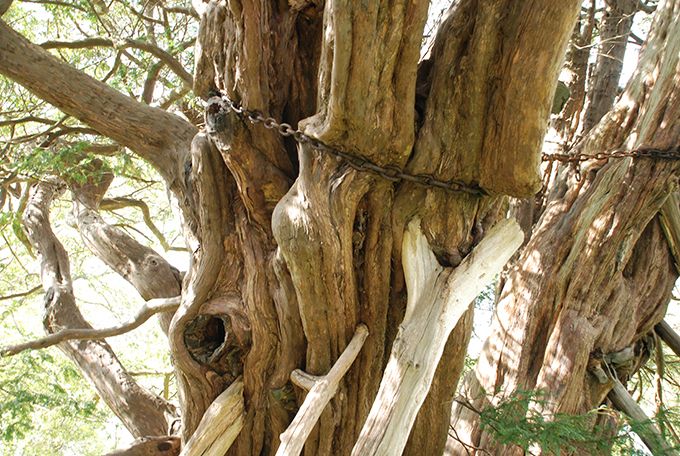
This is a wonderful tree which has been propped up with a large number of different and various techniques, including chains and wooden props. Hopefully not concrete. The squirrels love it.
They did some work 4 or 5 years ago to sort out some of the ways that it was being looked after. As you can see, the chains have got a bit tight and some of the props have also been soaked up into the bark. Social media is full of oak trees that soak up phone boxes and pillar boxes. So it’s just what happens really. The chains hopefully have been removed!
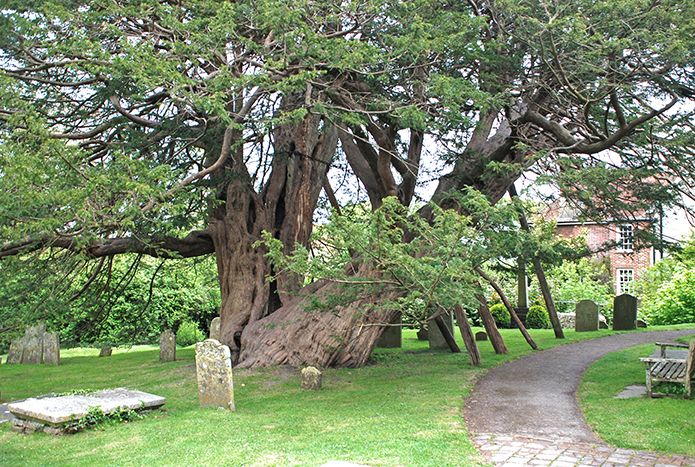
Coldwaltham (West Sussex)
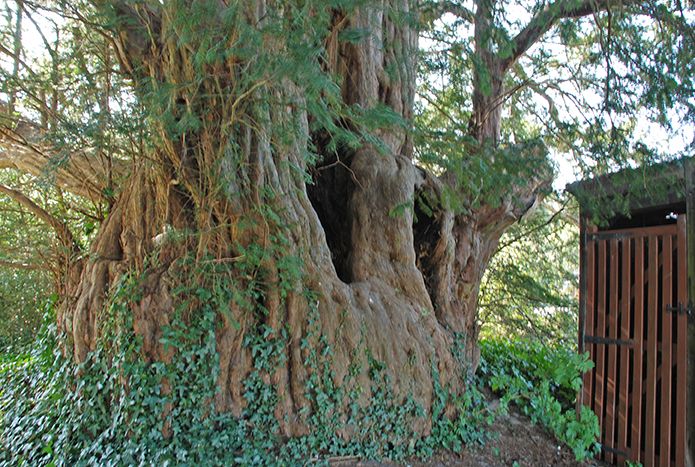
This venerable yew tree is a fine specimen, but sadly it is maltreated by having this massive great shed dumped down on its root plate, which is not good for it at all. Some of the surveyors that go out and look at it have suggested that its crown is not as healthy as it should be.
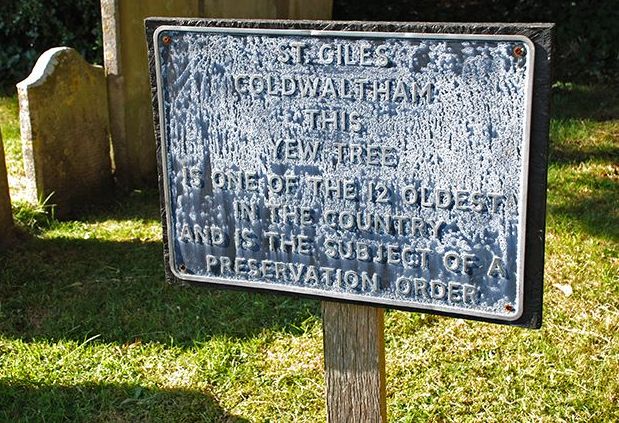
It looks phenomenal. It’s not suffering as much as it might do, but it’s just really not the right thing to do to a tree this amazing. It’s got an old sign that says it is one of the 12 oldest trees in the country and is the subject of a preservation order. It’s true about the preservation order. But nobody knows what the list of the 12 oldest trees is. There are a lot of ancient yew trees. There’s a great website www.ancient-yew.org that has all sorts of reports on yews across the country and encourages reports coming in on the health and whatever of yew trees. They laugh over the sign, but they don’t laugh at the tree. And they certainly don’t laugh about the shed.
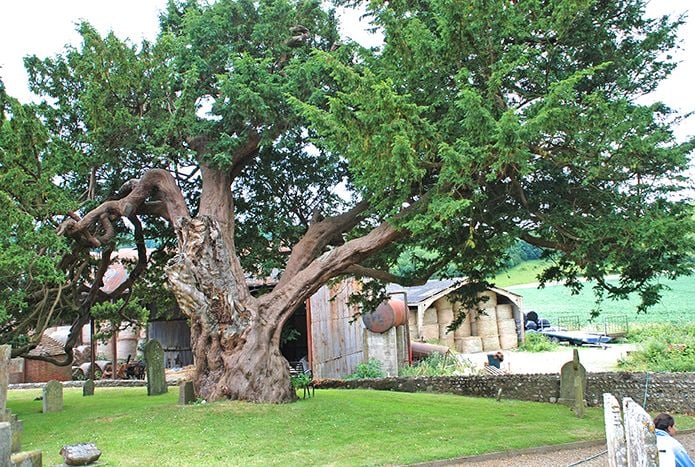
Sullington (West Sussex)
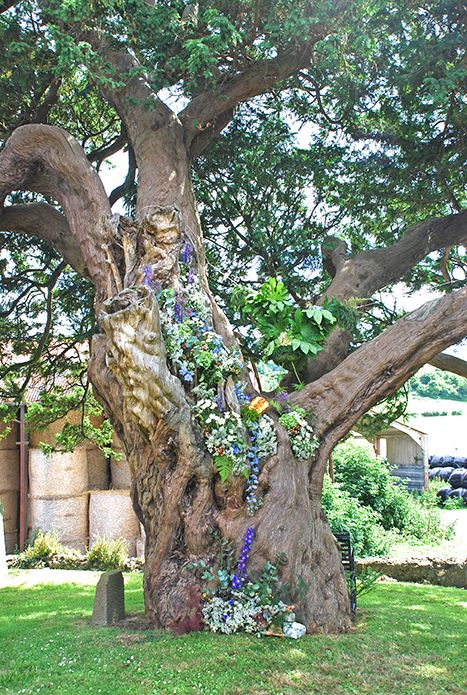
This is the sixth remaining of six yew trees that used to be majestic, yew trees in the churchyard. The 1987 and 1990 storms were pretty lethal. One of its limbs has gone. But another thing that tended to happen in well-meaning but not very clever times, was to fill the holes made with concrete. This can be very troubling. There are some very significant trees across the country that have had to suffer and struggle with this insane idea that putting concrete into the centre of the tree could do anything other than harm. But to take it out again would harm it as well. It’s what’s generally known as a bad idea. But when Sullington have their flower festival, they tend to celebrate the tree and make it look very much prettier with the flowers that they put on it.
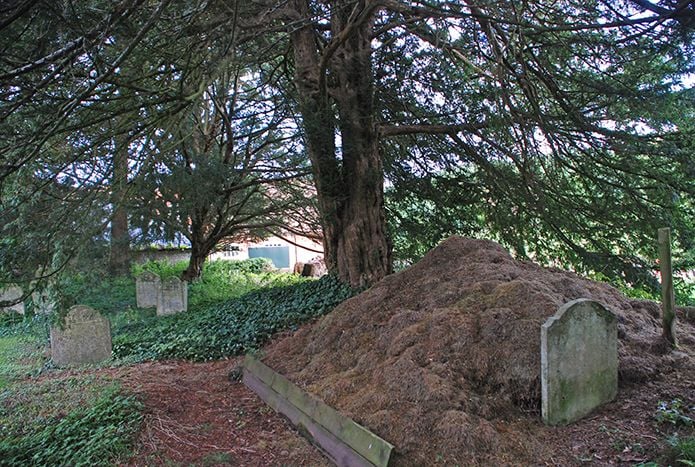
Buriton (Hampshire)
This is not a unique scenario. The thing with yew is it’s dark and in a churchyard. If you want to do things that you don’t really want people to be particularly affected by like maintenance activities, in this case the dumping of grass clippings on top of tombs, as well as yew roots, it tends to be done in the dark recesses of the branches of the trees, which again, is not a good idea. The weight is dubious for tree root health.
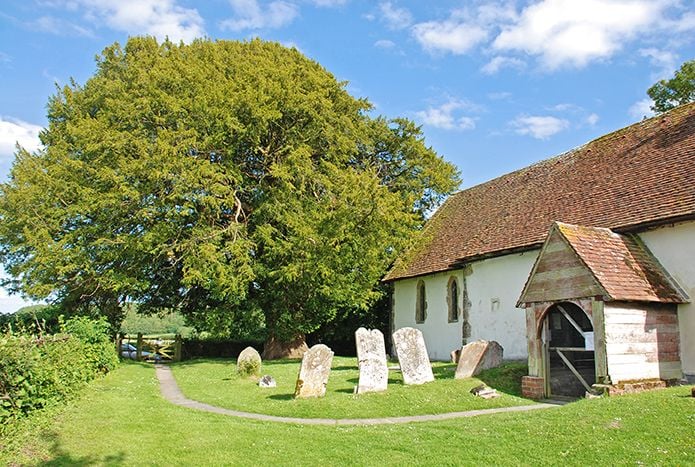
Didling (West Sussex)
There is a tale that takes place for that this survivor yew tree. In the Victorian era someone was walking up the path and happened upon somebody else who had taken it upon themselves to fell the tree for reasons best known to themselves. Possibly because it was so close to the church? He had started work with an axe and apparently you can still see the axe marks. It’s a fantastic tree, and it’s also got some very good lichens on it.
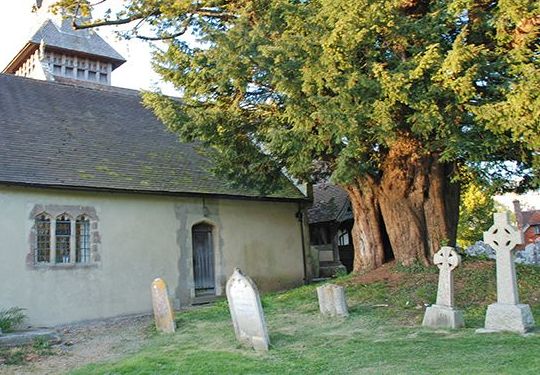
Steep (Hampshire)
Not all trees are much further away than that from the church. This is on the south side of the church.
Froxfield Green (Hampshire)
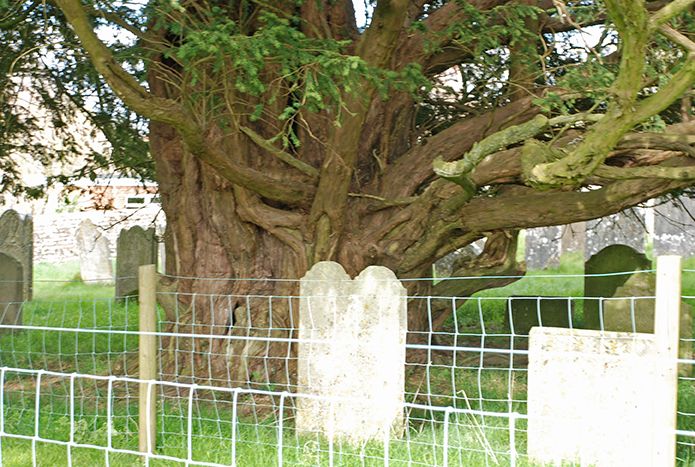
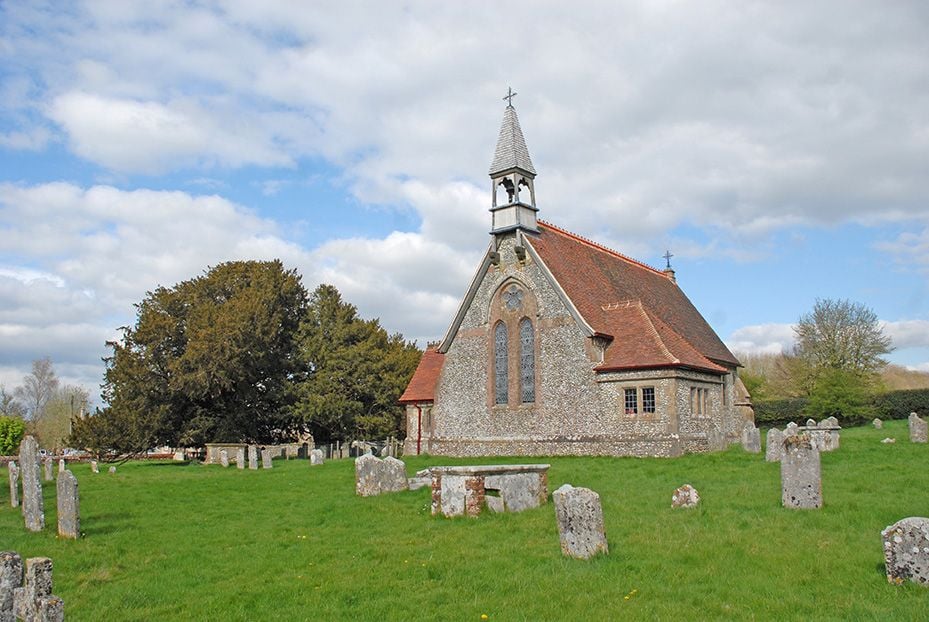
This is one of two magnificent yew trees. It is a tiny little church on the site of a much older church. High Cross (see above) was the church built briefly to replace it. It seeded a hamlet of its own but the next lord of the manor decided that he was going to build a little church because it wasn’t working that they had to go up to High Cross which, in those days, wasn’t a village but the chap who paid for the church happened to live next door to the field it was built in.
Corhampton (Hampshire)
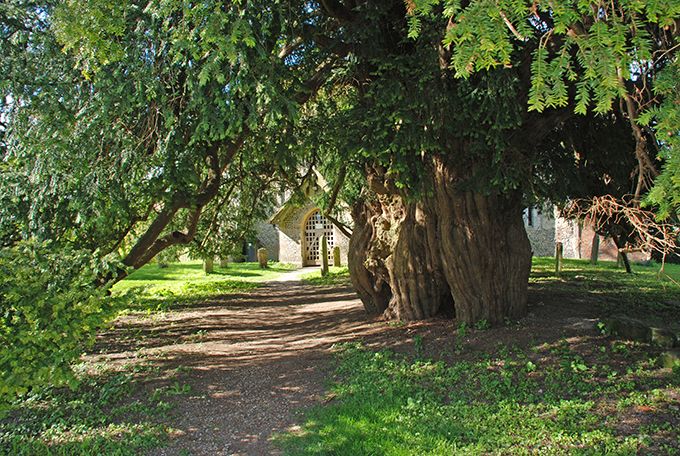
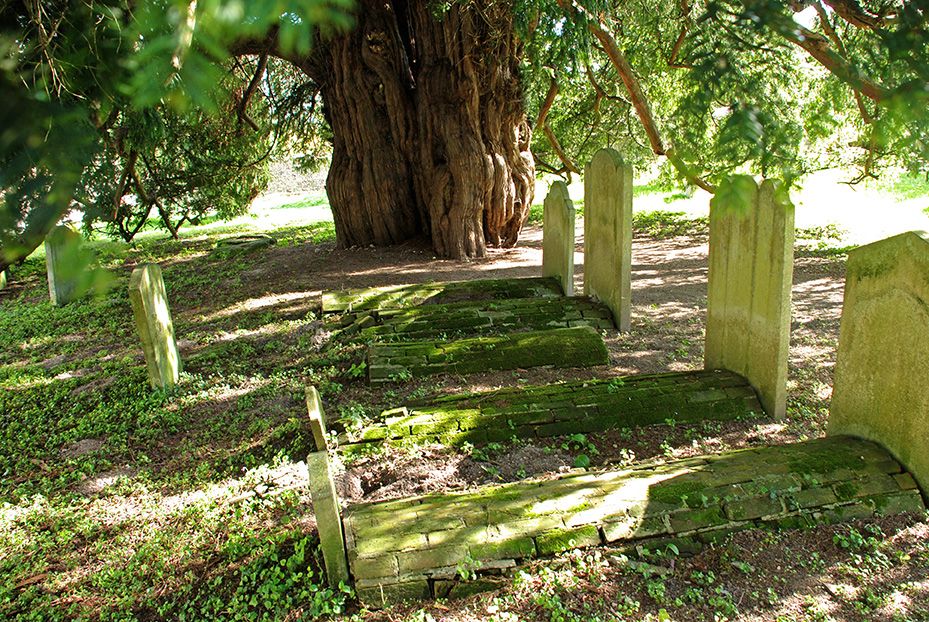
Another fabulous tree next to a church that has been dated to 1020, and the time of King Canute, so that ties in with the approximate date relating to the size of Selborne’s yew. And again here is the association with the fact that the leaves don’t drop and eternal life, or the link to eternal life, meaning that a lot of people wanted to have their graves in association with the trees and in dark corners. It’s strange because to us in modern times, to be in the dark would be tricky. But for early folk, it really did matter. And it’s likely that the brick covers for the tombs are because they wouldn’t have been able to dig the graves as deeply in respect of the roots of the tree. Hopefully, given the tree is strong, buoyant and magnificent and soars high above the church it obviously had no problems having the graves there, and it looks as though they’ve been done with respect.
I have probably missed out a whole raft of things that I intended to say, but there’s so much that can be said about these beautiful trees.
Comments